Backpack or messenger for commuting
The choice is not about style. It comes down to how much weight you carry, how often you open the bag, and whether you cycle.
Sep 9, 20264 min read
In short
- Over 4 kg, a backpack. Two straps halve the load on each shoulder.
- Opening the bag more than twice a journey, a messenger. A flap beats a zip you cannot reach.
- Cycling puts a messenger on your back at the wrong angle. Backpack, or a strap that crosses.
Start with the weight
A 16-inch laptop with its charger is about 2.4 kg before anything else goes in. Add a water bottle, a folder and a change of clothes and a commuting bag is routinely over 4 kg.
Past that, one shoulder is doing work it was not built for. A backpack spreads the same load across two straps and a back panel, and the difference shows after twenty minutes, not two.
Then count how often you open it
A messenger opens on the move, one-handed, without being taken off. If your commute means a ticket, a phone, a book and a pass, that matters more than the weight does.
A backpack has to come off every time. On a quiet train that costs nothing; standing in a full carriage it is the whole argument.
The bicycle settles it
On a bike a messenger rides across the back and swings on corners unless the strap is stabilised. A backpack sits still. If you cycle even two days a week, that is the answer for all five.
Our own range, and which is which
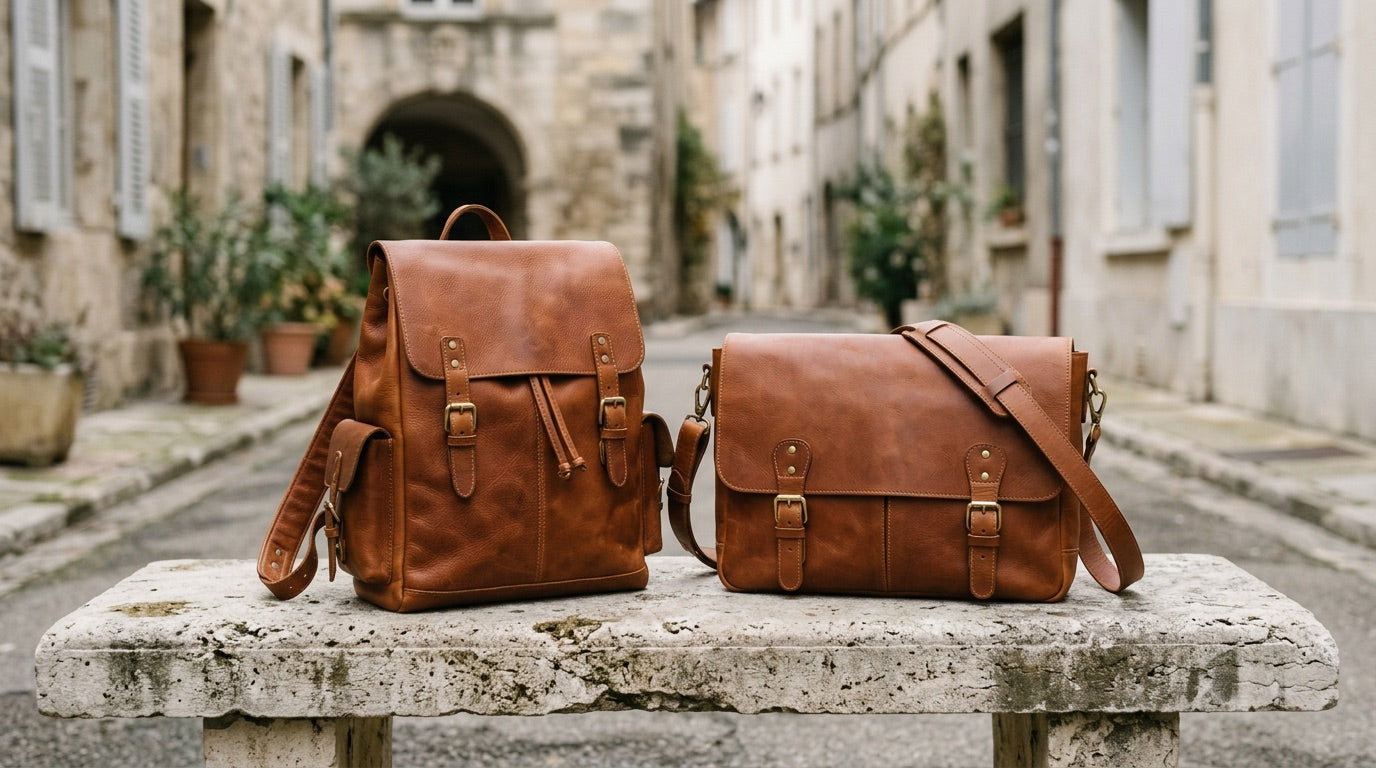
The two backpacks in our own range run 14 and 26 litres and take a 16-inch laptop. The messenger is 7 litres and sized for a 12-inch machine, which is the honest use for a flap bag carried on one shoulder. The rest of the catalogue is manufacturer stock, and each page carries the figures its supplier documents.
If you need a 16-inch laptop on one shoulder, a briefcase is the shape that does it without the swing.
Mentioned in this article
The Marylebone Grande
$360.99
The Marylebone Flap
$208.99
The Hatton Slim
$303.99


