Care
Full-grain and top-grain leather, explained
Full-grain keeps the hide's outer surface, top-grain has it sanded off. That one difference decides how a bag ages, what it costs and how it should be cleaned.
8 September 2026, 5 min read
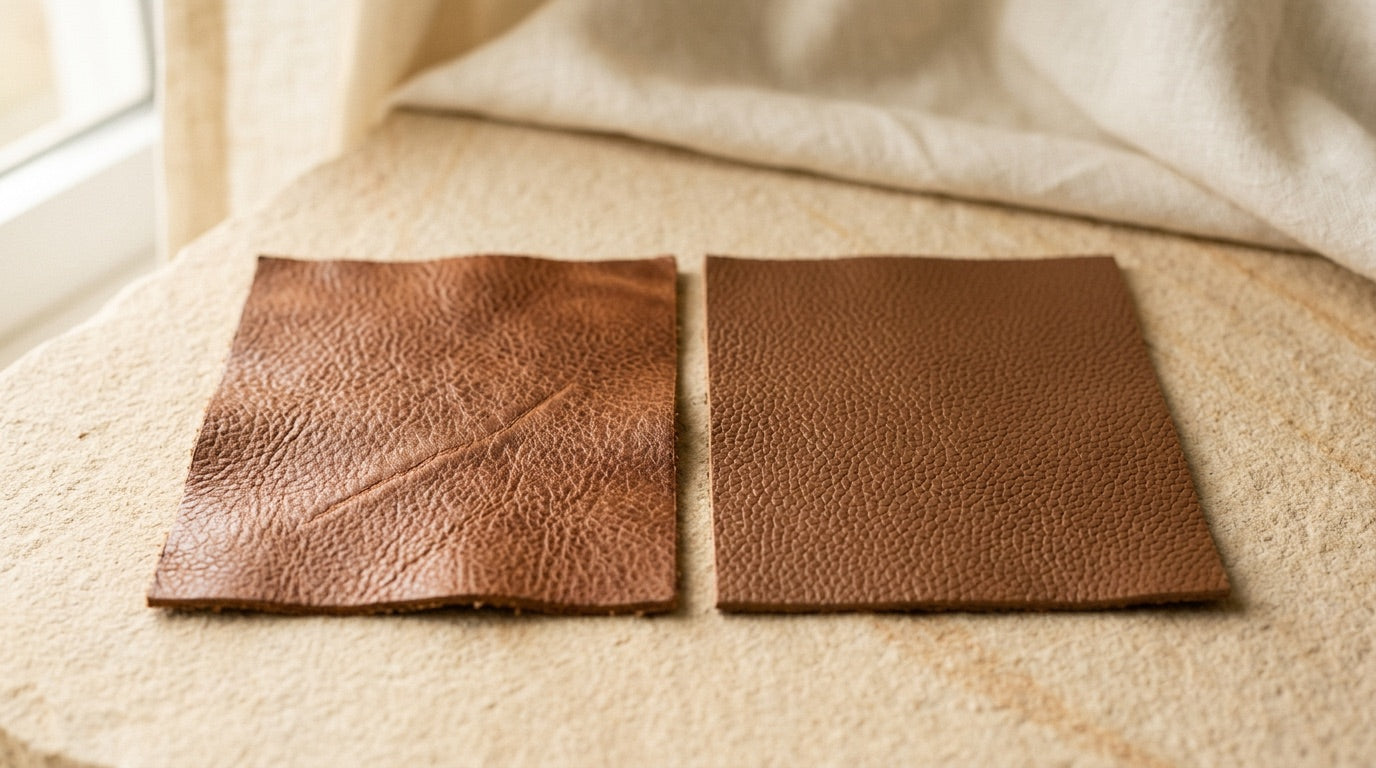
The three labels, in order of quality
A hide has layers. The outer one, where the hair grew, is the densest and the strongest. What a tannery does with that layer is what the label on a bag is describing, and the vocabulary is not intuitive.
- Full-grain: the outer layer is left intact. Strongest, darkens with use, shows the animal's own marks.
- Top-grain: the outer layer is sanded away and a finish is sprayed on. Uniform, more stain-resistant, stays as it is.
- Genuine leather: real leather, from the layers below. It is the floor of the category, not a badge.
What changes over five years
Full-grain absorbs oil from hands and air, and the colour deepens unevenly where the bag is held. That is patina, and it is the reason people keep these bags.
Top-grain has a film between the leather and the world. It resists a coffee spill better and it looks the same in year five as in year one. Neither is wrong, they are different purchases.
How to tell them apart in a photograph
Look at the surface at an angle. Full-grain shows pores of irregular size and the occasional healed scar. A perfectly even pebble across a whole panel is an embossed finish, which means the grain was sanded first.
The cut edge is the other tell. Full-grain has a dense, fibrous edge that takes a burnish. Corrected leather often shows a painted edge hiding a softer core.
Cleaning follows the label
Full-grain takes a conditioner and needs one, once or twice a year. Top-grain mostly needs a damp cloth: conditioner sits on the finish rather than entering the leather, and too much of it leaves a film.
Solvents are wrong for both. Alcohol wipes strip the finish off top-grain and pull the oils out of full-grain.


